How a well system works
Follow your water from the aquifer, up through the pump and pressure tank, and into your kitchen — and learn the warning signs at every stage.
How a well system works
- 1
The aquifer
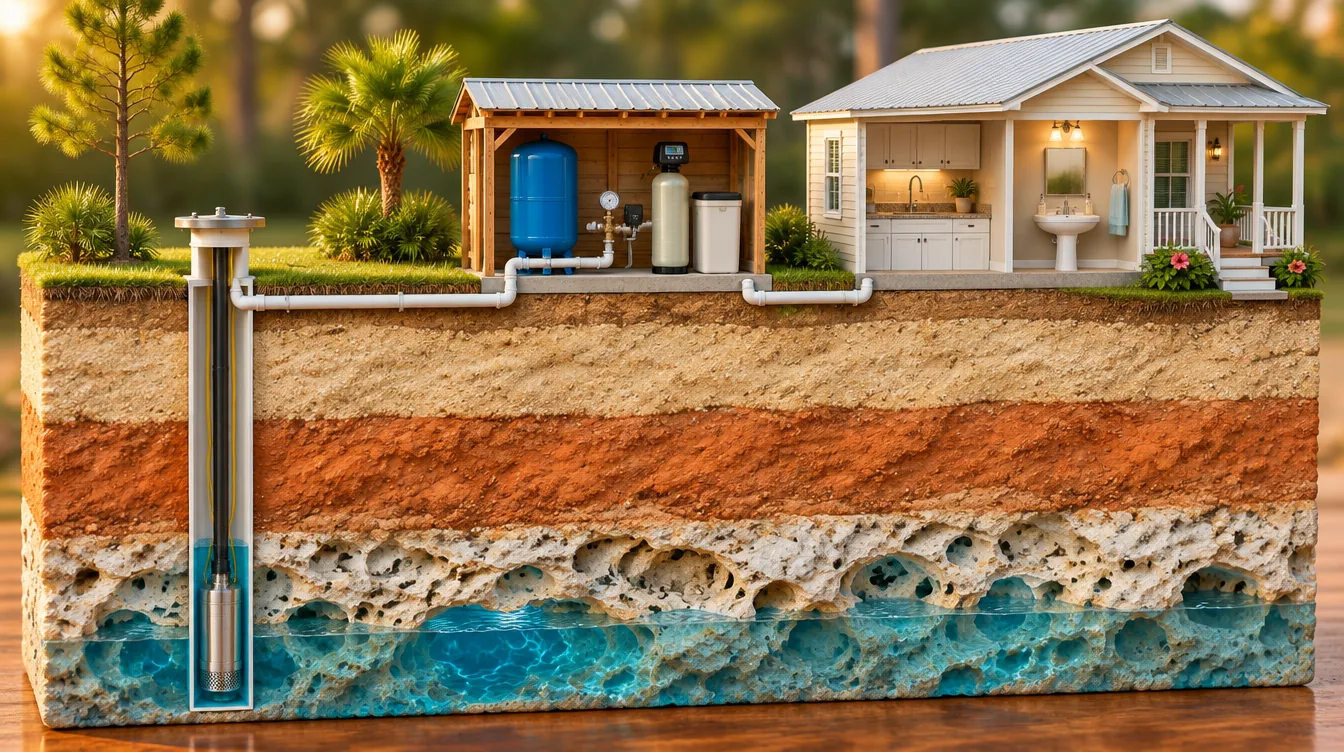
Your water starts underground. Most Panhandle wells draw groundwater from layers of sand and porous limestone — the Floridan aquifer is the big one under much of the region.
Sand or grit in your water can mean the well needs attention.
- 2
Submersible pump
Down in the well, a submersible pump sits below the water line. Its electric motor spins a stack of impellers that push water up toward the surface.
A pump that hums but sends no water, or keeps tripping the breaker, needs a look.
- 3
Casing, drop pipe & well cap
Water rises through the drop pipe inside the well casing, which keeps soil and surface water out. Power runs down to the motor beside it, and a sealed cap protects the top.
A cracked or loose well cap lets in bugs and runoff.
- 4
Pressure tank & switch
Water is pushed into the pressure tank, where a cushion of air stores it under pressure. The pressure switch starts the pump when pressure drops and stops it when the tank is full.
Rapid on-off clicking (short cycling) usually means a waterlogged tank — and it wears pumps out fast.
- 5
Water treatment
Next, water can pass through conditioning or filtration — a softener for hardness, and filters for sulfur, iron or sediment — so it tastes, smells and looks right.
Rotten-egg smell or orange stains? The right treatment fixes both.
- 6
Into your home
Pressurized, treated water flows to every faucet, shower and appliance. Open a tap, pressure drops, the switch kicks the pump on, and the cycle starts again.
Low pressure or no water? We answer 24/7.
Your well, part by part
1. The aquifer
Your water starts underground. Most Panhandle wells draw groundwater from layers of sand and porous limestone — the Floridan aquifer is the big one under much of the region.
Watch for: Sand or grit in your water can mean the well needs attention.
2. Submersible pump
Down in the well, a submersible pump sits below the water line. Its electric motor spins a stack of impellers that push water up toward the surface.
Watch for: A pump that hums but sends no water, or keeps tripping the breaker, needs a look.
3. Casing, drop pipe & well cap
Water rises through the drop pipe inside the well casing, which keeps soil and surface water out. Power runs down to the motor beside it, and a sealed cap protects the top.
Watch for: A cracked or loose well cap lets in bugs and runoff.
4. Pressure tank & switch
Water is pushed into the pressure tank, where a cushion of air stores it under pressure. The pressure switch starts the pump when pressure drops and stops it when the tank is full.
Watch for: Rapid on-off clicking (short cycling) usually means a waterlogged tank — and it wears pumps out fast.
5. Water treatment
Next, water can pass through conditioning or filtration — a softener for hardness, and filters for sulfur, iron or sediment — so it tastes, smells and looks right.
Watch for: Rotten-egg smell or orange stains? The right treatment fixes both.
6. Into your home
Pressurized, treated water flows to every faucet, shower and appliance. Open a tap, pressure drops, the switch kicks the pump on, and the cycle starts again.
Watch for: Low pressure or no water? We answer 24/7.
When something goes wrong
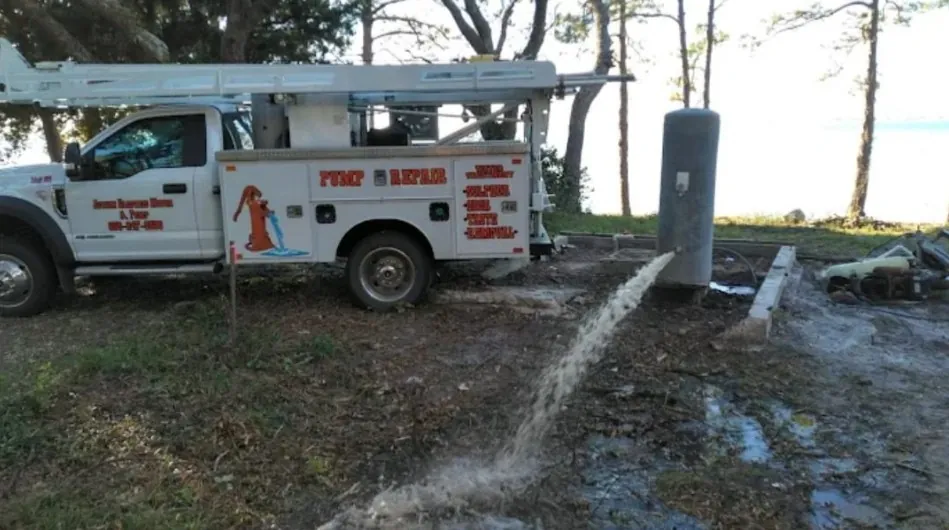
Most well problems show up as one of a few symptoms: no water, low or surging pressure, a pump that cycles on and off, or water that smells, stains or looks wrong. Each points to a different part of the system. We diagnose on site and explain what we find before any work begins. See well pump repair, water well systems and water treatment.
Well system questions
How deep are wells in the Florida Panhandle?
It varies a lot by location and by which water-bearing layer the well taps. Your well's depth affects which pump and how much horsepower it needs, which is one reason we size pumps to the individual well.
What does a pressure tank do?
It stores water under pressure so the pump doesn't have to start every time you open a faucet. Fewer starts means longer pump life. A tank that has lost its air charge causes rapid cycling.
Why does my pump keep turning on and off?
Rapid cycling is most often a waterlogged pressure tank or a failing pressure switch. Left alone it can burn out the pump motor, so it's worth a call.
Do I need water treatment on a well?
Not always. It depends on what's in your water. Sulfur smell, staining, scale and sediment are the usual signs that treatment will help.
We warranty everything we do.
Every pump, every repair, every install. If it’s not right, we come back and make it right.
Water out? Call now.
For emergencies, calling is fastest. A real person answers, 24 hours a day.